Ann Koome
For 28-year-old medical student Elena Vancea, the high-speed rail journey from Madrid was supposed to be a routine trip to visit family. Instead, she found herself at the epicenter of Spain’s deadliest rail disaster in more than a decade, surviving a catastrophic 100 mph collision that claimed at least 68 lives.
Vancea was seated in the middle of the Iryo train when a widespread computer failure caused it to come to a sudden halt between Los Yébenes and Urda. Passengers had been waiting patiently in their seats for nearly twenty minutes when the disaster struck without a single moment of warning.
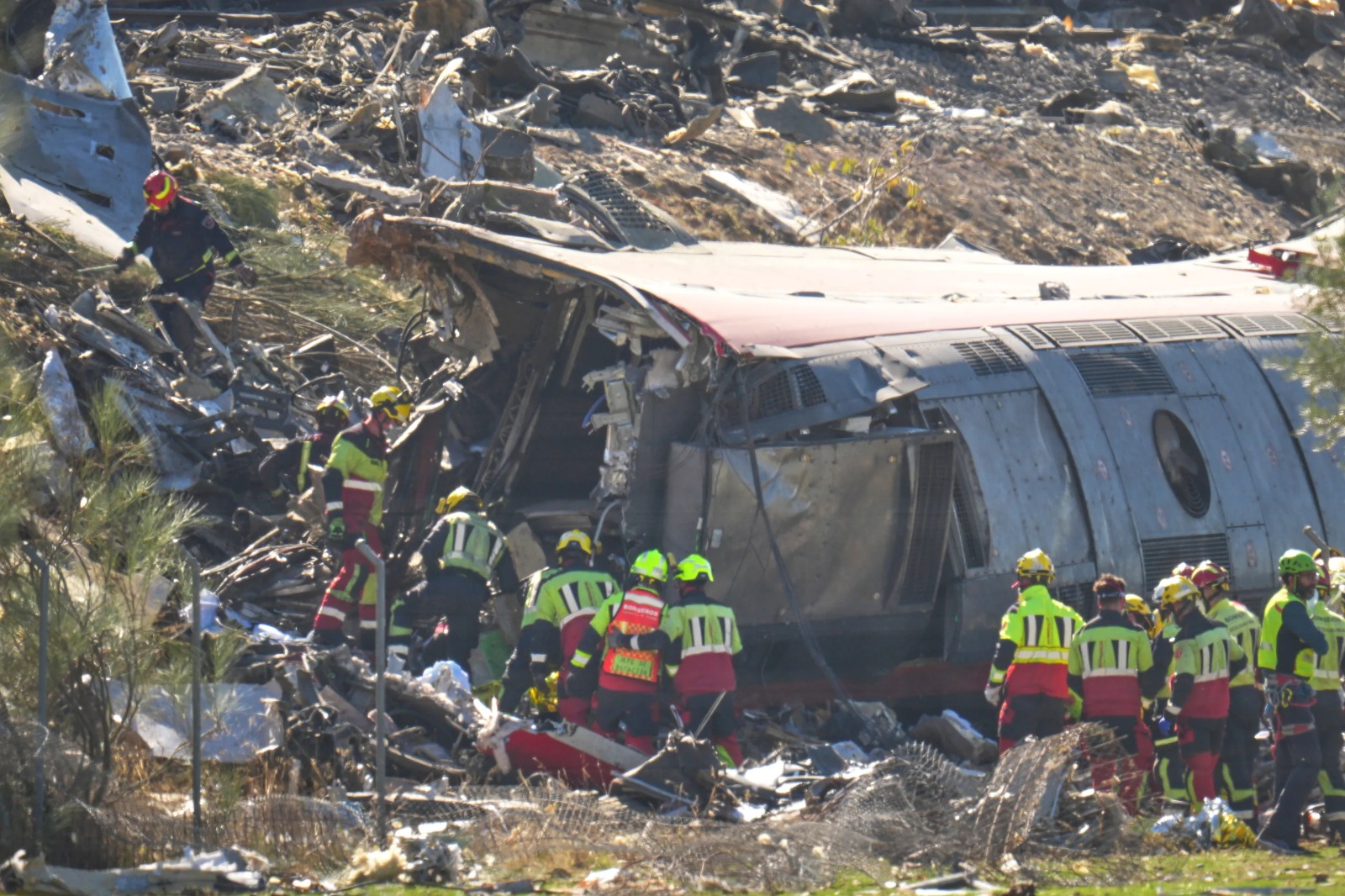
A trailing Renfe train, mistakenly cleared by control center operators to proceed without speed restrictions, slammed into the back of Vancea’s stationary train.
“There was no sound of braking, just a massive explosion of sound,” Vancea recalled from her hospital bed, her face scratched and her left arm bound in a cast. “The impact threw me completely forward into the seat in front of me. Then the carriage detached, tipped over, and began rolling down the embankment. It felt like being trapped inside a tumbling washing machine made of jagged metal.”
When the carriage finally came to rest at the bottom of the ravine, Vancea was pinned under a mass of dislodged luggage and broken plastic panels. The cabin was pitched in near-total darkness, filled with thick dust, the smell of burning electronics, and the cries of trapped passengers.
Relying on her medical training to combat the rising panic, Vancea methodically checked her fingers and toes. Realizing she could still move despite a fractured wrist, she freed herself from the debris and used the light from her mobile phone to navigate the overturned cabin.
Before scrambling through a shattered emergency window to safety, Vancea stayed behind in the smoky wreckage to assist a dazed father and his young daughter who were wedged beneath a buckled seat. Outside, she met a scene of absolute devastation as local villagers and emergency responders began descending the steep hillside with stretchers.
Vancea is one of the more than 100 passengers currently recovering in regional hospitals. While she faces a long road to physical and emotional recovery, she remains acutely aware of how close she came to a different fate.
“Every time I close my eyes, I feel the train shaking,” Vancea said. “I lost my luggage, my phone is smashed, and my body aches everywhere, but I walked away. Looking at the wreckage on the news, I know it is a miracle that I am here to tell the story.”