Alexander Mutethia
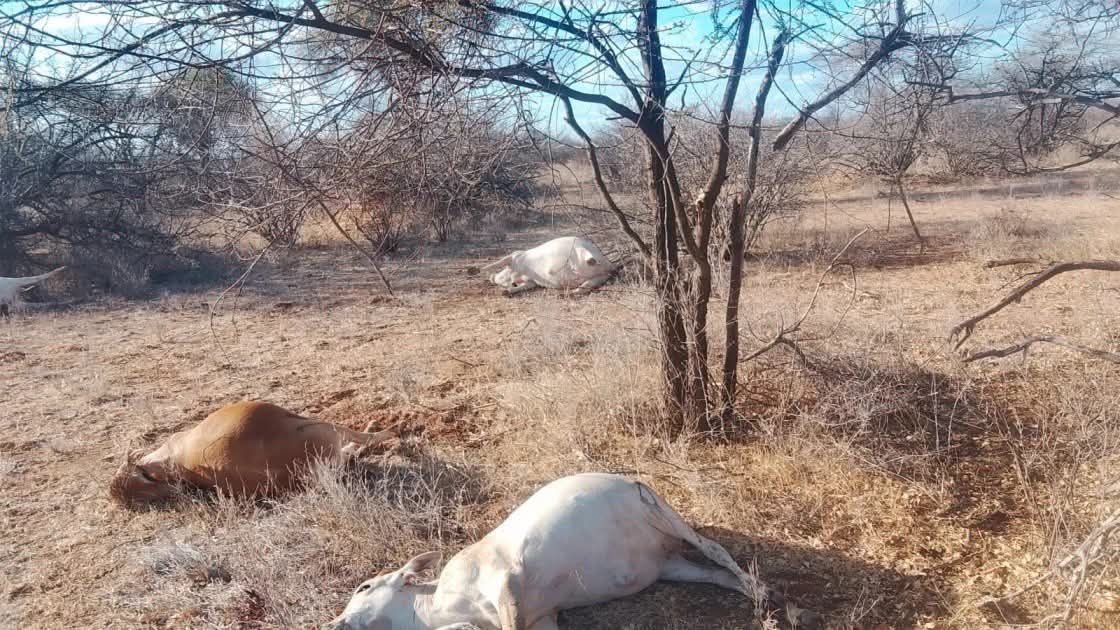
Residents of Samburu County are demanding approximately Ksh.70 million in compensation from the national government after more than 700 livestock belonging to 43 families were reportedly killed during a security operation in Samburu East.
The affected families, supported by local leaders and community representatives, have accused security officers of shooting cattle, goats, sheep and donkeys in the Losesia area, leaving households that depend almost entirely on livestock facing severe economic hardship.
Samburu Governor Jonathan Lati Lelelit has joined the families in demanding compensation, investigations into the reported killings, and an assessment of the losses suffered during the operation. Residents have also called for government intervention, arguing that livestock are the primary source of food, income, and education for many pastoralist families in the region.
According to figures presented by community representatives and county leaders, at least 717 animals had been documented by late September. The reported losses included approximately 415 goats, 352 cattle, and 50 donkeys, although the figures are still being documented and could change as more affected families are reached.
The families say the animals were killed at different locations during the security operation.
Governor Lelelit said the reported losses involved 43 families and put their combined value at about Ksh.70 million. The governor later said records presented at different locations included 102 cows killed in Komgala, while another area, Nengardedi, recorded the deaths of 243 cows, 116 goats, and 29 donkeys. However, authorities and independent investigators have yet to establish a final verified figure.
Representatives of more than 40 affected families accompanied Governor Lelelit to Archers’ Post Police Station, where reports concerning the alleged livestock killings were formally recorded. The families want authorities to establish what happened, identify those responsible, and determine whether compensation is legally and administratively justified.
Lelelit has said the county government supports efforts by the national government to restore security in the area but insists that security operations should not result in the destruction of property belonging to innocent citizens.
The governor has called for a transparent investigation and a comprehensive assessment of the losses.
Pastoralist households depend on cattle, goats, sheep and donkeys for food, income, school fees, healthcare, and other basic household needs. Residents have therefore warned that the reported killings could have long-term consequences for families that have lost their main source of livelihood.
Community representatives say some children from affected households could be unable to return to school because their parents can no longer raise school fees following the loss of their livestock.
Raphael Lenayara, one of the residents, described the losses as economic sabotage, saying livestock are the equivalent of productive assets for pastoralist communities.
Maa Association Chairman Jonathan Ole Pasha said the incident had caused psychological and economic distress among affected families.
Governor Lelelit has questioned why pastoralist communities should be treated differently from other farmers when their productive assets are destroyed. He has compared the situation to losses suffered by crop farmers and argued that government compensation mechanisms should also consider pastoralist livelihoods where livestock are destroyed.
The governor said the Ksh.70 million represents the estimated nominal value of the livestock lost and does not necessarily capture the future economic benefits the animals would have generated for the families. He urged the national government to establish a mechanism to assess and compensate affected families whose claims are verified.
The security operation came amid a series of violent incidents involving suspected bandits operating around the Samburu-Isiolo border. County leaders have said they support government efforts to restore peace and protect residents but have urged security agencies to distinguish between suspected criminals and innocent civilians.
Waso Ward MCA Kelvin Lemantaan has called for calm and urged residents who have fled their homes to return where it is safe to do so. He has also called on security officers to protect civilians and their property while pursuing people suspected of criminal activity.
Governor Lelelit has estimated that more than 15,000 residents from Waso, Wamba East, Wamba West, and Wamba North wards have fled their homes because of insecurity and fear associated with the security operation.
The reported displacement has increased concerns over access to food, healthcare, education, and other essential services.
Community leaders are therefore asking both levels of government to consider humanitarian assistance alongside any compensation process.
Local elders and peace leaders have urged the government and the community to pursue dialogue. Elder and peace committee member Diba Lenanyankera has called for engagement between elders, community representatives, and security officials to establish what happened and prevent further escalation.
The Samburu Professionals Association has separately called for a transparent mechanism to document and verify the reported livestock losses. The association says teams on the ground are recording the names of affected owners, the number and type of animals lost, and the locations where the deaths allegedly occurred.
The organization has stressed that the reported figure of 717 animals is preliminary and could increase as more families are reached. Such documentation could become important in determining the actual scale of the losses and establishing which families may qualify for compensation.
Governor Lelelit has also linked the latest incident to what he describes as longstanding grievances involving Samburu pastoralists and security operations. He has cited previous incidents, including an operation in 2008 in which he says more than 5,000 cattle belonging to pastoralists from Archers’ Post and Losesia disappeared after being driven through Waso Bridge.
He has also referred to reports of more than 2,400 Samburu cattle being killed in Laikipia between 2017 and 2022. These historical claims have been presented by the governor as part of the wider context surrounding the community’s current demand for government intervention.
The affected families want the government to conduct an independent and transparent assessment, verify ownership and losses, establish responsibility and determine an appropriate remedy. For the families, the issue is not simply the monetary value of the animals. Their argument is that the loss of livestock threatens the economic survival of households that rely on pastoralism.
The compensation demand of Ksh.70 million is therefore expected to remain a major issue as community representatives continue discussions with the national government.
Meanwhile, leaders are calling for continued dialogue between residents, elders, the county government and national security agencies to restore confidence and prevent further loss of property or displacement.
The reported figures and allegations concerning the livestock killings remain subject to official investigation and independent verification.